Showing posts with label Kalyana Utsavam. Show all posts

Monday, 11 April 2016

Tulsi Damodara Kalyanam/Vivah !!!

Viewing the Tulasi Kalyana Utsavam blesses one with happy married life, children and a peaceful family life!!

Tulsi Damodara Kalyanam/Vivah is the celestial wedding ceremony between Tulasi Devi and Damodara Murthy. Tulasi devi is the ardent devotee of Lord Vishnu and the wedding ceremony of Tulasi and Damodara is celebrated on the Dwadasi thithi of Karthika month. It falls on the evening of Friday, November 11 2016.

Tulasi Damodara Kalyana Utsavam Aarty
Tulasi pooja

Rows of Lamps are lit around the Tulasi plant and Sprigs & Leaves of Amla/Nelli Tree are kept near the Tulasi plant as seen in the photo above. Holes are made in small Nelli/Amla fruits and filled with ghee & wick to be lit as lamps as seen by the poojari holding the Aarty plate above.

The Following Sloka is to be recited when we should perform Pradakshina around the Tulasi and Amla/Nelli Plant

"Yanmoole Sarva Theerthani, Yanmadhye Sarva Devataha
Yadagre Sarva Vedascha Tulasim Thwaam Namamyaham"

 Sloka Meaning: 
"All the Sacred Theerthas reside in the roots of the Tulasi Plant, All the deities reside in the middle of the plant and the Vedas reside at the Tip of the Plant. Salutations to you Tulasi Devi!!"

Tulasi pooja can be carried out every evening and blesses one with happy married life, children and solves every difficult problems in life!! Just like the sincere Devotion of Tulasi Plant which is considered priceless by Lord Krishna Himself.

In Dwaraka there is a story that in the Tula Bharam or Weighing Scale, Lord Krishna's weight could not be matched by the entire jewels and riches of his consort Sathyabama, but the single Tulasi leaf offered devotionally by Rukmini Devi weighed heavier than Lord Krishna Himself!!

Tula Bharam-Tulasi weighing heavier than Lord Krishna!!

Tulasi Devi-Gandaki River in Nepal

There is also a story about the Hair of Tulasi becoming the Gandaki River in Mukthinath temple situated in Nepal. Lord Vishnu himself became the Salagrama, unique black stones found only in the banks of the River Gandaki. Hence there is a custom of celebrating the Kalyana Utsava of Tulasi with Saligrama stones also.

Mukthinath Vishnu Temple

Gandaki River with Saligrama Stones

Agasthiar.org through their Monthly spiritual magazine Agasthiya Vijayam details that near Tirumazhisai town located near Chennai Bangalore Highway, there is a village named Sithukadu which houses ancient Shiva and Vishnu temples.

The ancient name of this village was 'Tirumanam' as many wedding ceremomies of Maharishis and gods took place in this temple. The Sthala Vriksham of the Vishnu Temple is the Nelli/Amla Tree. Here wedding ceremony between the Nelli/Amla tree and Tulasi Plant is performed on Tiruvonam/Sravanam Star Days. This is said to bless people with happy married life, children and remove obstacles in marriage.

Also the darshan of Parrots/Kili on top of the Nelli/Amla Tree during evenings is said to bless couples to have a peaceful married life and resolve issues. Even Today one can see parrots flocking here in evenings.

Tulasi Plant with Nelli/Amla Tree in Sithukadu
 Parrorts on top of the Nelli/Amla tree
Sithukadu or Tirumanam Vishnu Temple

Friday, 1 April 2016

Radha Kalyanam !!

Agasthiar.org based on the teachings of Sathguru Venkatarama Swamy has gifted this world the Wonderful picture of Radha Kalyanam, The celestial wedding of Radha Devi with Lord Krishna. The detailed explanation of the same is in their website link below,


Agasthiya Vijayam details that the Daily Darshan of this divine wedding will bless one  and one's society with prosperity, peace, tranquility, and bliss in married life. Agasthiya Vijayam further explains that there are more than 1008 complete auspicious energy sources in this painting!!!.

 Bhaktha Jayadeva and Geeta Govindam

Bhaktha Jayadeva was a 12th Century Devotee Poet who lived in present day Orissa Bengal region. Geeta Govindam is lyrical poetry in Sanskrit extolling the Divine Love between Radha and Krishna.  

'Sringara Rasam' is one of the nine rasas of Natya Shastra  wherein Sringara refers to Love/attraction/Beauty and Rasam means Flavour. Geeta Govindam  is known as 'Sringara Mahakavya' as it describes the various moods in relation to the Divine Love between Radha and Krishna.

Geetha Govindam is the blessed work of Poetry in which Lord Krishna himself composed a verse for Jayadeva when Jayadeva was confused regarding inclusion of a specific verse wherein Radha places her feet over Lord Krishna's head.

Agasthiar.org explains that this verse written by Lord Krishna is Parama Paraalakshmi Divine Feet Mantra

 The English lyrics of the same is as follows:

"Smara garala khandanam, Mama Sirasi Mandanam 
Dehi Pada Pallavamudhaaram
 Jwalathi Mayi Dhaaruno Madana Khadanaanaruno,
Harathu Thadhupaahita Vikaaram"

Meaning

"The beautiful flower blossoms of Your feet counteract the deadly poison of amorous love. They extinguish the terrifying fire of the pain of that love, which rages within My heart. Therefore, please be kind and allow Your feet to decorate My head"

 Bhatha Jayadeva visualised this verse in his mind and was confused whether he has to include this verse as it portrayed Radha placing her head over the Supreme Lord Krishna. He feared if it would become a mistake and left the house in order to take bath in Ganga river. 

Lord Krishna wanted to prove the sincerity and greatness of his Bhaktha Jayadeva and took the form of Jayadeva and entered his house. Jayadeva's wife Padavathy was surprised that her husband had come back so early. Krishna in Jayadeva's form asked Padmavathy to annoint his head with Oil. Padamavathy, the dutiful wife applied oil. Krishna in Jayadeva's form wrote the verse above and left the oil marks in the writing as proof of having visited the place. Then Krishna in Jayadeva's form left the house.

The real Jayadeva came back to the house. Padmavathy was surprised that her husband had again come back so soon. She asked him regarding the same. Jayadeva replied that he came only now and did not come before.  Jayadeva initially did not believe what she said, but when he saw the verse written with oil markings, he was overjoyed that Lord Krishna himself acknowledged the truth in his writings and came and completed the verse. Radha really did place her head over her Lord Krishna!! He also realised that her wife was blessed to have the privilege of having seen Lord Krishna and even given him an oil massage.

Agasthiar.org explains that this mantra written by Lord Krishna himself rains spiritual blessings and leds us to Salvation. Agasthiay Vijayam also details the patrika or Wedding Invitation of Radha Kalyanam in Tamil as explains that this patrika has to be present in every house.

Radha Krishna Wedding Invitation

The Divine Rasa Leela Dance of Lord Krishna on the banks of Yamuna has been the inspiration behind this Dance video and is a treat to watch.....Enjoy Watching it!!


Thursday, 31 March 2016

Shiva Parvathy Kalyanam, Mylapore Chennai

Viewing the Shiva Parvathy Kalyana Utsavam blesses one with happy married life, children, prosperity and happiness!!! 

The Celestial Shiva Parvathy Kalyana Utsavam took place in Mylapore Temple in Chennai on Panguni Uthiram day on Wednesday March 23 2016. Here Lord Shiva is known as Kapaleeswarar and Goddess Parvathy is known as Karpagambika.


Kolavizhi Amman is the Kaval Devatha or the Deity who is incharge of the Mylapore Region. There is a separate temple for her in Mylapore. 'Kolam' means round shape and 'Vizhi' means eyesight/vision. Truly the Eyes of the Goddess are beautiful as seen in this photo below. Kolavizhi Amman is a form of Bhadrakali.

It is to be noted that even today first pooja even in Brahmotsavam in Mylapore is performed to kolavizhi amman before performing pooja to Kapaleeswarar. The Utsava Murthy of Kolavizhi Amman is taken out in procession first before 63 Nayanmargal procession in Brahmotsavam.

Kolavizhi Amman
 Utsava Moorty of kolavizhi Amman

Sthala Puranam of Kapaleeswarar Temple

Lord Shiva was imparting wisdom to Goddess Parvathy. Parvathy was distracted by a beautiful peacock and lost her concentration to the subject detailed by Lord Shiva. Lord Shiva cursed Parvathy that she would take birth as a peacock. She visited several places and finally reached Mylapore. Here she performed penance and Shiva Pooja under Punnai Maram/Tree. Hence this place is known as 'Mayilapur' which is colloquially known as Mylapore today(Mayil in Tamil means peacock).

Lord Shiva was pleased with Parvathy's penance and the celestial wedding ceremony of Shiva and Parvathy took place in Uthiram Nakshatra/Star in Panguni tamil month. Every year Brahmotsavam is held in the month of Panguni and kalyana utsavam is held on Uthiram Nakshatra star day.

Kapaleeswarar
Brahma Deva was proud that he had five faces and Lord Shiva wanted to teach him a lesson. Lord Shiva plucked the Fifth Head of Lord Brahma. The Fifth head stuck to Lord Shiva's hand as Skull which is known as Kapalam in Sanskrit/Tamil. Hence Lord Shiva here is known as Kapaleeswarar.

Karpagambal
Karpaga Vriksham in Tamil and Kalpa Vriksham in Sanskrit refer to the divine wish giving tree in heaven. Goddess Parvathy satisfies the wishes of her devotees here, hence she is known as Karpagambal.

Nakshatra Aarty to Kapaleeswarar

There is saying in Tamil that 'Kailaye Mayilai, Mayilaye Kailai'. It means that Kailash in Sanskrit or Kayilai in Tamil, the celestial abode of Lord Shiva is the same as Mylapore and Mylapore is the same as Kailash to Lord Shiva. 

Agasthiar.org details that Mylapore is Kailash itself owing to the 7 Shiva Temples in Mylapore in their website link below,


The Seven Shiva Temples in and around Mylapore are as follows,

1) Karaneeswarar
2) Theerthapaleeswarar
3) Velleswarar
4) Virupaksheeswarar
5) Valeeswarar
6) Malleswarar
7) Kapaleeswarar

 Shiva Parvathy Kalyana Homa/Havan Agni continously burning for 4 yugas!!!


Goddess Parvathy took many forms to perform penance and marry Lord Shiva since Kritha Yuga, the first of 4 Yugas. When Parvathy was born as the Daughter of Himavan, the King of Mountains in Himalayas Parvathy is known as Himadri sutha or Daughter of Himavan.

In Kritha yuga or the first of four yugas, the marriage of Lord Shiva and Parvathy in the presence of Lord Vishnu took place in  Himalayas in a place currently known by Triyugi narayan in the State of Uttarkhand. The Temple is located on the way to Kedarnath. The Google map location of the same is as follows:


Tri means 3
Yugi means Yuga
Narayan is the Vishnu Avatar who witnessed Shiva Parvathy wedding.

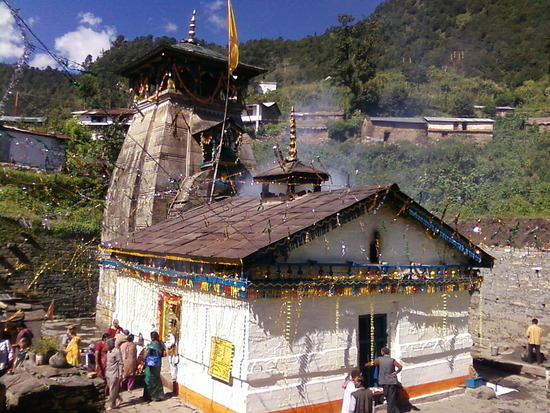
The Fire has been continuously burning in Kritha, Tretha, Dwapara Yugas. Hence the Temple is known as Triyuginarayan Temple.

The Homa/Havan conducted during the Shiva Parvathy wedding is still burning since the Kritha yuga here. Families reside in triyuginarayan to provide firewood and continue to protect the fire for the years to come. This tradition was rejuvenated by Adi Shankaracharya when he travelled to this temple. He nominated separate families for protecting the fire.

Even the Darshan of the Agni here will bless one with Happy married life, Children and happiness!!
Triyugi Narayan Temple with smoke coming out continously owing to Agni

Brahma Shila: It is the Shila/Peetam/Base on which Lord Shiva and Parvathy were seated when they performed the Kalyana Homa/Havan in Triyuginarayan Temple. Photo of the same below,